I used to think “cutting-edge ocean technology” meant underwater drones, satellite systems, and equipment that costs more than my future college tuition. You know—things with buttons. Things that beep.
Then I learned about clam gardens.
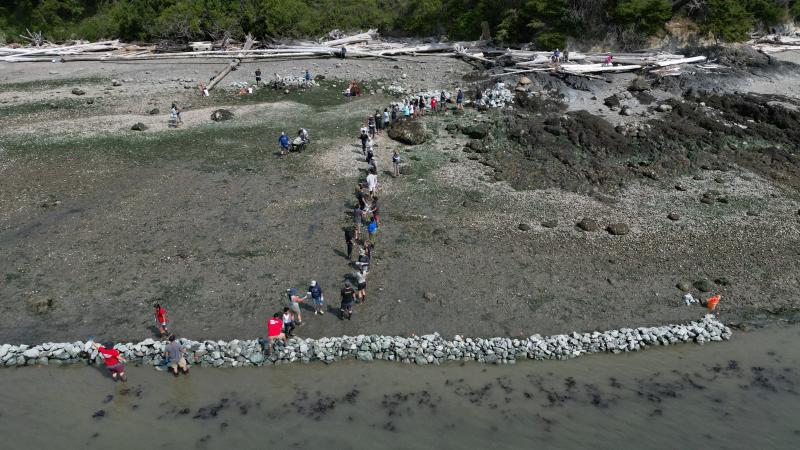
For at least 3,500 years, Indigenous communities in the Pacific Northwest have been building rock walls along shorelines at low tide. That’s it. That’s the technology. Rocks.
But those rock walls trap sediment, create ideal growing conditions, and produce four times more clams than untended beaches. No electricity. No fish feed. No PhD required.
Meanwhile, modern aquaculture is scrambling to figure out sustainable fish farming, and Indigenous peoples have just been… quietly doing it. For millennia. With rocks.
I needed to understand how this worked. So I wrote a research paper. (Some people play video games. I read about hydrodynamics and Indigenous mariculture. We all have our things.)
My paper explores the science behind clam gardens, the colonial history that nearly erased them, and the restoration efforts bringing them back—not just as ecological structures, but as cultural spaces where knowledge passes between generations.
Here’s what keeps me thinking: we spend so much time searching for “new” environmental solutions. But what if the best solutions aren’t new at all? What if they’ve been here the whole time, held by communities whose knowledge we’ve ignored?
Clam gardens aren’t primitive. They’re sophisticated—and science is finally catching up to what Indigenous knowledge holders have understood for generations.